

Why WHS and First Aid Belong Together — And Why Ascent Should Be Your Partner
Work Health and Safety (WHS) and First Aid aren’t separate boxes to tick — they’re two halves of a complete safety system. WHS prevents incidents through smart planning, risk management, and compliance. First Aid ensures that when something unexpected happens, your people can respond immediately and confidently.
At Ascent First Aid, we bring both sides together, so your workplace isn’t just compliant — it’s genuinely safer, more prepared, and more resilient.
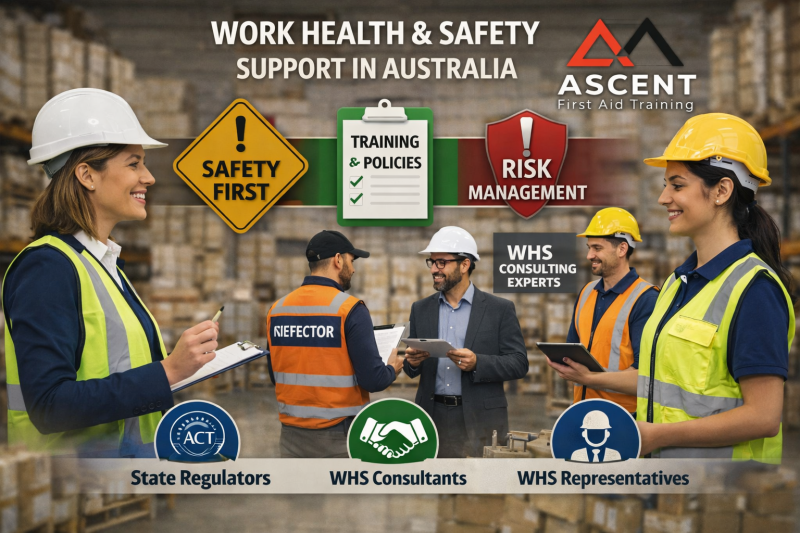
A Complete Safety Framework, All in One Place
Prevention + Response. WHS identifies hazards and reduces risks. First Aid ensures rapid, effective care when something still goes wrong. With Ascent, you get both — seamlessly integrated.
Legal Compliance Made Simple. Australian WHS legislation requires workplaces to provide first aid equipment, facilities, and trained personnel. We make compliance effortless with:
-
Nationally recognised first aid training
-
First aid kit supply, audits, and restocking
-
AED supply, checks, and full management
-
WHS inspections, Hazard Identification and tailored Safety Management Systems
- Test and Tag - Electrical
Reduced Harm, Every Step of the Way. Strong WHS practices reduce incident frequency. High‑quality first aid training reduces the impact of those incidents. Our approach strengthens both sides, giving your team the best possible protection.
A Safer, More Confident Workplace Culture. When employees see that you take WHS and first aid seriously, trust grows. Confidence grows. Safety becomes part of your culture — not just a requirement.
Holistic Risk Management. WHS focuses on systems and controls. First Aid addresses the human response when controls fail or unexpected events occur. Ascent brings these together into one clear, practical, fully supported solution.
Below are a few options that might be of interest to you. If you need further information or something completely different, please don't hesitate to contact us.